
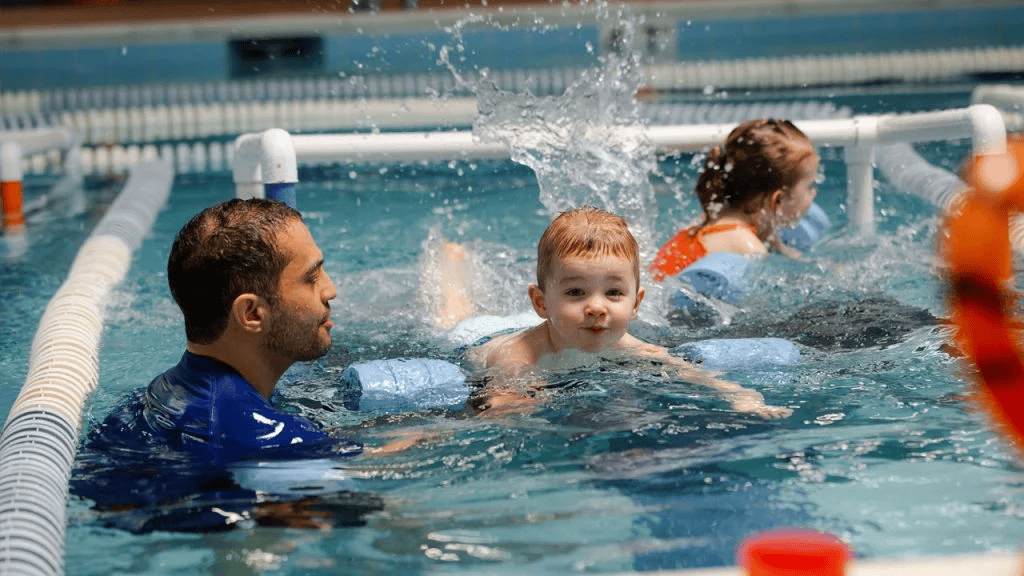
Track your child’s swimming progress effectively by understanding skill development phases, assessment criteria, and realistic expectations. Learn how to evaluate growth through Family Aquatics’ structured program approach.
Understanding how to accurately assess your child’s swimming development empowers you to celebrate genuine achievements, identify areas needing support, and maintain realistic expectations throughout their aquatic journey. At Family Aquatics, our 12-phase Learn-to-Swim Program provides structured progression criteria, but many parents struggle to differentiate between meaningful skill advancement and simple time spent in the pool. This guide draws on expertise from our qualified teaching team, including assistant manager Ryan’s three decades of coaching experience and instructors trained in Laurie Lawrence’s principal teaching methods. These five evaluation approaches help North Brisbane families recognize both technical swimming skills and equally important developmental markers like water confidence, safety awareness, and independence. By understanding what genuine progress looks like at each phase, you can support your child’s development more effectively while appreciating that swimming competency develops at individual rates based on each child’s unique starting point and learning style.
1. Understand the developmental phases of swimming competency
Recognize that swimming proficiency develops through distinct stages from water familiarization through stroke refinement. Family Aquatics structures learning through 12 carefully designed phases that address age-appropriate skills and confidence levels. Early phases focus on water comfort, submersion, floating, and basic safety skills. Intermediate phases develop propulsion, breathing techniques, and distance swimming. Advanced phases refine stroke mechanics, build endurance, and prepare students for squad swimming or competitions. Progression timing varies significantly between children based on individual development, prior water exposure, and confidence levels. Understanding this framework helps set realistic expectations aligned with your child’s current phase.
2. Observe specific skill markers during lessons
When watching from our Family Aquatics parents room, look for concrete skill development rather than vague impressions of “doing well.” Notice whether your child enters the water independently, demonstrates comfort with face submersion, maintains horizontal body position when floating, or coordinates breathing with arm movements. Track skills like the distance they swim unassisted, whether they can retrieve objects from the pool floor, how confidently they perform water entries, and their comfort in deeper water. Our instructors with specialized qualifications assess these markers systematically. Specific observations provide more accurate progress pictures than general feelings about improvement.
3. Review instructor feedback and assessment communications
Pay close attention to progress reports, informal feedback after lessons, and formal assessments provided by your Family Aquatics instructor. Our team, backed by over 40 years of combined teaching experience, identifies both strengths and areas requiring additional practice. Ask specific questions about what skills your child demonstrates consistently versus those still developing. Inquire about recommended activities for home practice and realistic timelines for phase progression. Quality swim schools like ours built on Laurie Lawrence’s principal teachings use structured assessment criteria rather than subjective impressions. Understanding instructor evaluations helps reinforce appropriate skills at home.
4. Compare progress against individual baselines rather than peers
Assess your child’s development relative to their own starting point rather than comparing them with classmates or siblings. A child who initially refused to put their face in water but now comfortably submerges has made tremendous progress even if others in their group swim longer distances. Family Aquatics maintains small class sizes and individualized instruction specifically because children develop at different rates. Some students advance quickly through early phases but require more time mastering stroke refinement, while others progress steadily across all phases. Our instructors never rush advancement before genuine skill mastery occurs, ensuring each child builds competency appropriate to their developmental readiness.
5. Recognize non-technical progress alongside physical skills
Value improvements in confidence, independence, focus, and water safety awareness as legitimate progress markers. Notice if your child enters the pool more willingly, follows instructor directions more consistently, demonstrates less distraction during lessons, or exhibits improved listening skills. Observe their comfort level in our North Brisbane facility, their willingness to attempt new challenges, and their emotional regulation when tasks feel difficult. These developmental gains often precede physical skill advancement and indicate readiness for more complex techniques. Our Family Aquatics instructors, many with childcare and education backgrounds, understand that building confident, safety-conscious swimmers requires holistic development beyond just physical technique acquisition.