
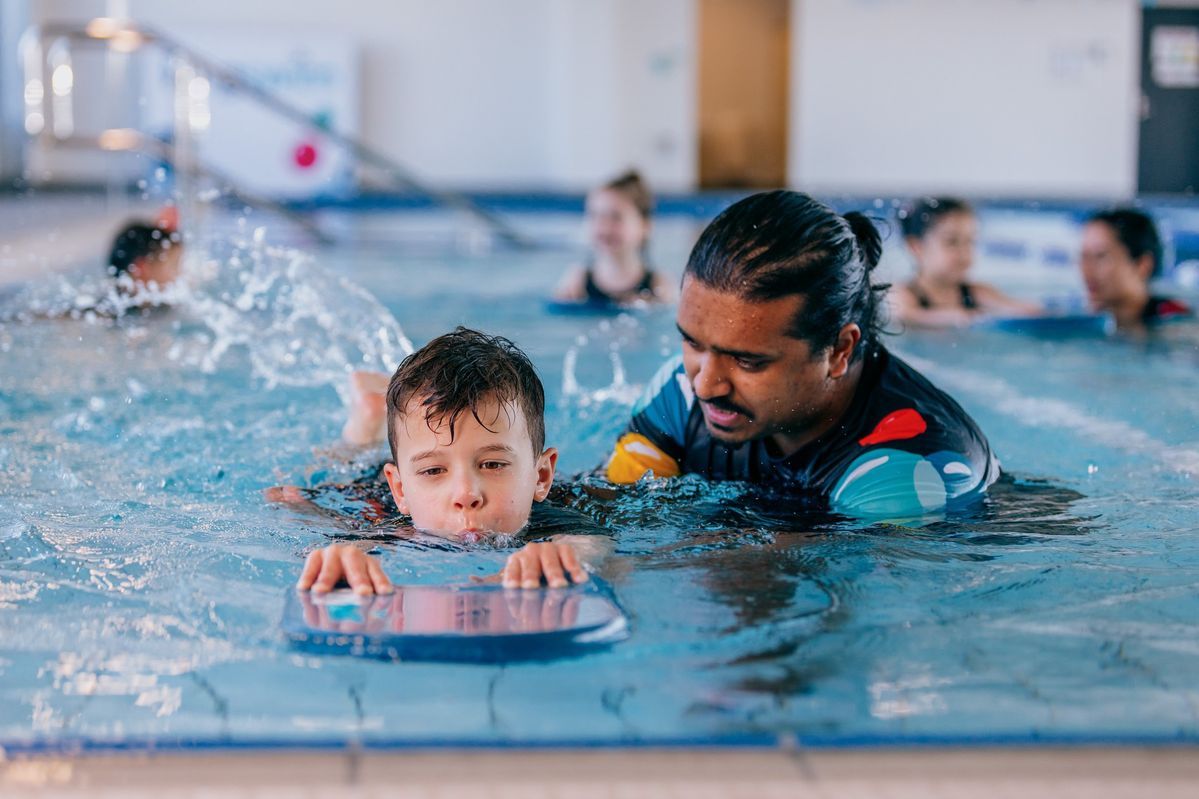
Support your child’s swimming development between lessons with practical activities and reinforcement strategies. Discover how to accelerate progress through our 12-phase Learn-to-Swim Program at Family Aquatics.
Swimming competency develops through consistent practice and reinforcement that extends far beyond weekly lessons at the pool. At Family Aquatics, our 12-phase Learn-to-Swim Program built on Laurie Lawrence’s principal teachings provides structured instruction, but your involvement between lessons significantly accelerates skill development and confidence building. This guide shares proven strategies from our experienced teaching team, including assistant manager Ryan who has coached swimming since 1994 and instructors with specialized infant and preschooler qualifications. These five practical approaches help families reinforce water safety concepts, practice emerging skills, and maintain the momentum necessary for steady progression through our phases. By implementing these between-lesson activities in your North Brisbane home, you become an active partner in your child’s swimming journey rather than simply a lesson observer.
1. Reinforce water safety concepts during everyday activities
Use daily opportunities to discuss water safety principles taught at Family Aquatics, such as pointing out lifeguards at public pools, explaining why we never run near water, or identifying where swimming is safe versus dangerous. When watching television or reading books featuring water scenes, ask your child what safety rules apply in those situations. This repetition outside formal lessons helps internalize the crucial water safety education our instructors provide. Consistent messaging between our 12-phase program and home reinforcement accelerates understanding and retention of life-saving concepts.
2. Practice skills in the bathtub with supervision
Dedicate bath time once or twice weekly to practicing specific techniques your Family Aquatics instructor is currently teaching. If your child is working on blowing bubbles, make a game of who can create the biggest bubble stream. For older children learning streamline positions or arm movements, demonstrate these skills in the limited space available. Always supervise closely and never leave children unattended around water, even in home bathtubs. Keep practice sessions brief, playful, and pressure-free to maintain enthusiasm rather than creating additional stress about skill mastery.
3. Maintain consistent attendance at scheduled lessons
Regular attendance provides the repetition essential for skill development and progression through our phases. Swimming competency builds through cumulative practice, and gaps between lessons can result in regression, particularly for younger or less confident swimmers. Our North Brisbane facility operates Monday through Saturday with morning and afternoon options specifically to help families maintain consistency. If illness or unavoidable circumstances require absence, resume lessons as quickly as possible. The over 40 years of combined teaching experience across our team has demonstrated that students attending consistently progress significantly faster than those with irregular participation.
4. Celebrate specific achievements without comparison
Acknowledge particular skills your child masters, such as putting their face in water, floating independently, or swimming a certain distance. Be specific with praise, saying “You kept your arms straight during your glide today” rather than generic “good job” comments. Avoid comparing your child’s progress with siblings, classmates, or other students in their lesson group. Our instructors design individual progression timelines because children develop water confidence and physical skills at different rates. Your enthusiastic recognition of personal milestones, no matter how small, builds the confidence essential for tackling more challenging techniques.
5. Incorporate swimming discussions into family routines
Ask open-ended questions about lessons during car rides home or at dinner, such as “What was your favorite activity with your instructor today?” or “What new skill did you practice this week?” This demonstrates your genuine interest in their swimming journey and provides opportunities for your child to process and reinforce learning through verbal explanation. Share your own swimming memories or water experiences to normalize discussion around aquatics. When planning family outings, involve your child in identifying safe swimming locations and discussing what water safety rules apply, connecting their Family Aquatics education to real-world scenarios.